
Understanding Erectile Dysfunction Without the Embarrassment
Erectile dysfunction is more common than many men realise, but that does not make it any less frustrating when it happens. It can affect confidence, intimacy, and a man’s sense of self, especially when the issue becomes persistent or starts to put pressure on a relationship.
Understanding how to treat erectile dysfunction starts with working out why it is happening. Erections rely on blood flow, nerve signals, hormones, arousal, and psychological well-being working together. When one or more of those areas is affected, erections may become less reliable, less firm or more difficult to maintain.
What Can Cause Erectile Dysfunction?
Erectile dysfunction can have several possible causes, and more than one factor may be involved at the same time. For some men, ED is mainly physical. For others, stress, anxiety or relationship pressure may be more important. In many cases, the picture is mixed.
Possible causes and contributing factors include:
- Blood flow problems linked with cardiovascular health
- Diabetes, nerve changes or circulation issues
- High blood pressure or high cholesterol
- Medication side effects
- Hormone changes, including low testosterone in some men
- Smoking, vaping, alcohol use or reduced fitness
- Stress, anxiety, low mood or performance pressure
- Relationship tension or changes in intimacy
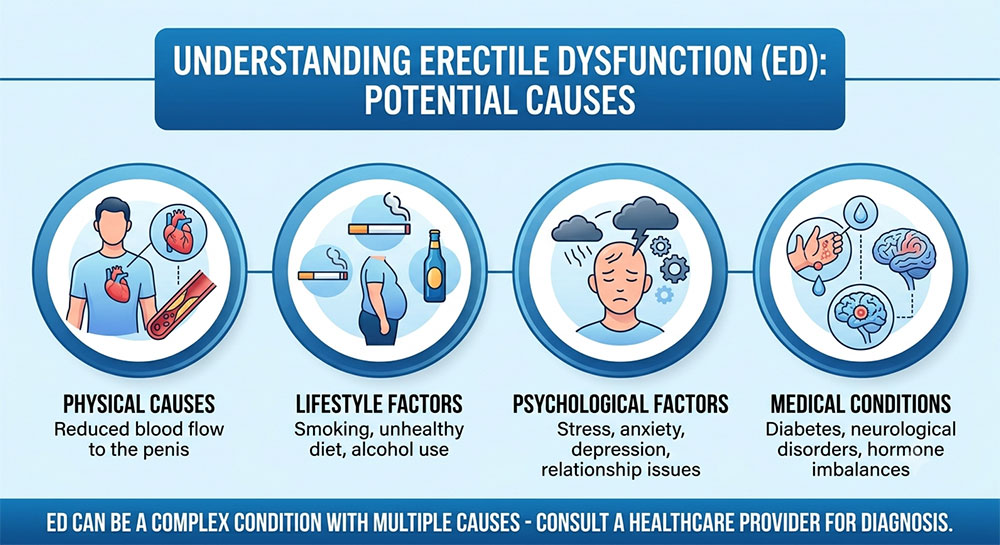
Understanding the cause of erectile dysfunction is the first step towards choosing the right treatment pathway.
How to Treat Erectile Dysfunction Naturally
Some men can improve erectile dysfunction by addressing lifestyle factors that affect circulation, energy, sleep and general health. These steps are not an instant cure, and they will not solve every case of ED, but they can be a sensible starting point when symptoms are mild, recent or linked with overall wellbeing.
Lifestyle-based steps may include increasing regular physical activity, reducing smoking or vaping, limiting alcohol intake, improving sleep, managing weight where relevant, addressing stress and reviewing blood pressure, cholesterol or diabetes with a doctor.
Medical Treatments for Erectile Dysfunction
Medical treatment depends on the likely cause of the problem, the man’s general health and whether any other symptoms are present. A doctor may also review medications, cardiovascular risk factors, hormone symptoms, and lifestyle factors before recommending the most suitable option.
Treatment options may include:
- Oral ED medication designed to support blood flow involved in erections
- Hormone assessment if symptoms suggest low testosterone or another hormonal issue
- Medication review if ED may be linked with a current prescription
- Counselling or sex therapy where anxiety, stress or relationship pressure is involved
- Vacuum erection devices for men who are not suited to tablets or prefer another option
- Penile injections or specialist treatments in more complex cases
- Referral to a urologist if ED is persistent, severe or not responding to initial treatment
When Should You See a Doctor About Erectile Dysfunction?
Occasional erection difficulty can happen, particularly during stress, tiredness, illness or after alcohol. It becomes more important to seek medical advice when ED is persistent, keeps returning, develops suddenly, affects confidence or relationships, or appears alongside symptoms such as reduced libido, fatigue, urinary changes or signs of poor cardiovascular health.
A doctor can help identify whether the issue is physical, psychological, medication-related or mixed. This assessment can also help determine whether any underlying health concern needs attention, rather than treating ED as an isolated problem.
Vasectomy does not cause erectile dysfunction, but it is natural for men to ask questions before the procedure.
Does Vasectomy Cause Erectile Dysfunction?
A vasectomy does not cause erectile dysfunction. The procedure works by preventing sperm from entering the semen. It does not reduce testosterone, stop erections, remove libido, prevent orgasm or stop a man from ejaculating. After a vasectomy, the testicles continue to produce testosterone and sperm; the sperm are simply reabsorbed by the body rather than being released in the semen.
This distinction matters because men sometimes worry about sexual function before a vasectomy. That worry is understandable, but the anatomy involved in vasectomy is not the same anatomy responsible for erections. Erections depend mainly on blood flow, nerve function, hormones and arousal, while vasectomy involves the tubes that carry sperm.
Can Sex Feel Different After a Vasectomy?
Most men should not expect a vasectomy to change the way sex feels. The amount of fluid released during ejaculation is also usually similar, because sperm make up only a small part of semen. The main change is that, once clearance is confirmed after follow-up testing, the semen should no longer contain sperm.
It is still important to follow post-procedure instructions and avoid sex until advised after the vasectomy. Men also need to use another form of contraception until they have been given the all-clear after semen testing. Vasectomy is not immediately effective, and sperm can remain in the reproductive tract for a period after the procedure.
Talking Through Concerns Before Your No-Scalpel Vasectomy
At Gentle Procedures Sydney, questions about sexual function, erections, ejaculation and confidence are completely appropriate to raise during consultation. Vasectomy involves a sensitive area of the body and a permanent contraceptive decision, so it is natural for men to want clear answers before proceeding.
If erectile dysfunction is already present before a vasectomy, or if it develops later, it should be assessed as a separate men’s health concern rather than assumed to be caused by the vasectomy.
Treating ED Starts with Understanding the Cause
Erectile dysfunction can often be treated, but the right approach depends on why it is happening. For some men, lifestyle changes and general health improvements may help. For others, medication, counselling, hormone assessment or specialist treatment may be more appropriate.
If you are considering a vasectomy and are worried about erections or sexual function, the most important step is to ask those questions before proceeding. Vasectomy does not cause erectile dysfunction, but a consultation can help you understand the procedure clearly, separate facts from common worries and make a more confident decision about your reproductive health.
Book Your No-Scalpel Vasectomy in Sydney
If you’re ready to explore your options for permanent male contraception, a no-scalpel vasectomy may be the solution you’ve been looking for. With fewer complications, a faster recovery and no stitches, it’s a modern approach to a time-tested procedure.
Book online now or call (02) 9248 0118 to speak with our team.
No referral. No pressure. Just professional, personalised care.
FAQs
Can erectile dysfunction go away on its own?
Erectile dysfunction may improve on its own if it is linked to a short-term issue such as stress, tiredness, illness or alcohol. If it keeps happening, becomes worse or starts affecting confidence or relationships, it is worth speaking with a doctor rather than waiting and hoping it will settle.
What is the best treatment for erectile dysfunction?
The best treatment for erectile dysfunction depends on the cause. Some men may benefit from lifestyle changes, while others may need medication, hormone assessment, counselling or specialist care. A proper medical review helps identify the safest and most appropriate treatment pathway.
Can stress cause erectile dysfunction?
Yes, stress can contribute to erectile dysfunction. Anxiety, pressure to perform, relationship concerns and low mood can all affect arousal and erections. Stress may also exist alongside physical causes, which is why persistent ED should be assessed rather than assumed to be only psychological.
Can a vasectomy affect testosterone or sex drive?
A vasectomy does not lower testosterone or directly reduce sex drive. The procedure prevents sperm from entering the semen, but it does not stop the testicles from producing testosterone. Libido, erections, orgasm and ejaculation are not expected to change because of the vasectomy itself.
Can you still ejaculate after a vasectomy?
Yes, men can still ejaculate after a vasectomy. Semen is still released, but once clearance is confirmed after follow-up testing, it should no longer contain sperm. Another form of contraception is still needed until the post-vasectomy semen test confirms the procedure has been successful.