
Understanding Reliability, Failure Risk and Follow-Up Testing
Vasectomy is the most effective form of permanent contraception for men. For those who are certain they do not want children or do not want any more children, that level of reliability is one of the main reasons they choose to have the procedure.
Still, it is understandable to want to know whether vasectomies are 100% effective before making a decision. In this blog, we explain what the success rate means in real terms, why pregnancy after vasectomy is rare, and why follow-up semen testing remains an important part of confirming the procedure has worked.
Are Vasectomies 100% Effective?
No form of contraception can be described as 100% effective in every possible case. Vasectomy comes extremely close, with a success rate of over 99.9%, but there is still a very small chance of pregnancy in certain situations.
This does not mean vasectomy is unreliable. It means the procedure needs to be understood properly. The small remaining risk is usually linked to unprotected sex before sperm have cleared from the reproductive system, not completing follow-up testing, or a very rare failure after the vasectomy has initially worked.

Pregnancy after vasectomy is rare, but another form of contraception is needed until the procedure has been confirmed as successful.
Why Is Vasectomy So Effective?
A vasectomy is effective because it stops sperm from entering the semen. During the procedure, the vas deferens are cut or sealed so sperm can no longer travel from the testicles into the fluid released during ejaculation. Without sperm in the semen, pregnancy cannot occur through intercourse.
The procedure does not rely on hormones, daily medication or ongoing user action, which is one of the reasons it is so reliable once confirmed as successful. After a vasectomy, the body continues producing sperm, but the sperm are naturally reabsorbed rather than leaving the body in the semen.
Why Can Pregnancy Still Happen After Vasectomy?
Pregnancy after vasectomy is rare, but when it does happen, it is usually linked to timing or follow-up rather than the procedure being ineffective overall. The most important point is that a vasectomy does not work immediately. Sperm can remain in the reproductive system for a period of time after the procedure, which means pregnancy can still occur if another form of contraception is stopped too soon.
There are also rare cases where a vasectomy can fail after it initially appears to have worked. These situations are uncommon, but they are the reason vasectomy is described as over 99.9% effective rather than completely guaranteed.
Pregnancy after vasectomy may be linked to:
- Unprotected sex before follow-up testing confirms the vasectomy has worked
- Stopping contraception too soon after the procedure
- Not completing the follow-up semen test
- Sperm still present in the semen after the procedure
- Rare recanalisation, where the vas deferens reconnects
- Very rare long-term failure after an initially successful result
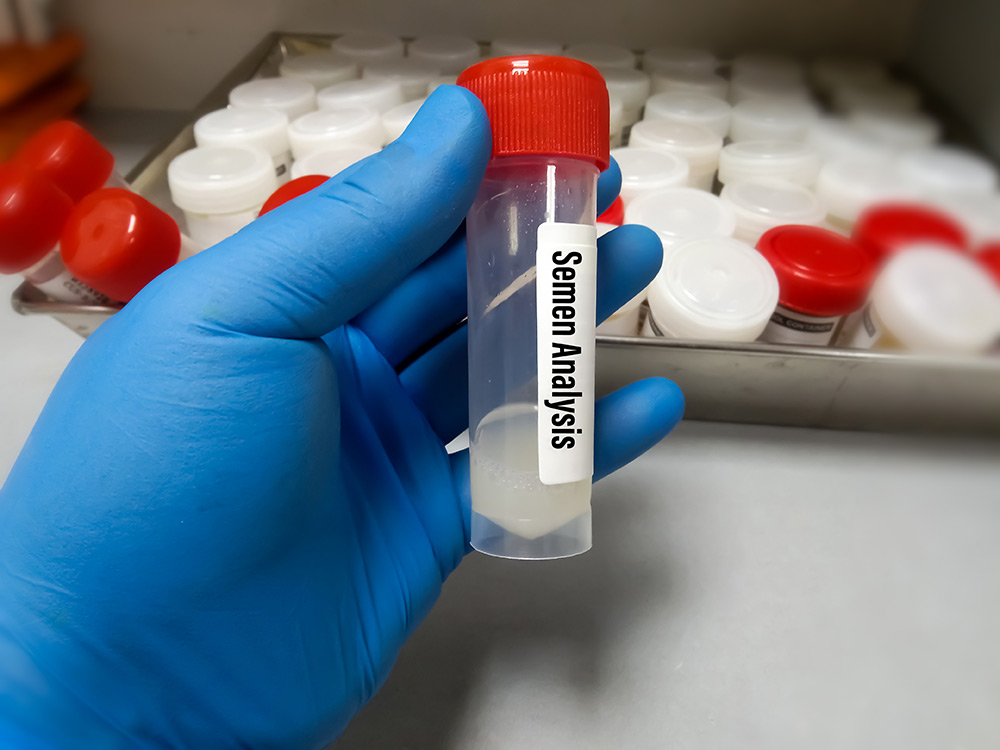
A semen test confirms whether sperm are still present after a vasectomy and whether contraception can be stopped.
When Does a Vasectomy Become Effective?
A vasectomy is not immediately effective because sperm can remain in the reproductive system after the procedure. This is why another form of contraception is still needed for the first few months, even if the procedure itself has been performed successfully. Relying on vasectomy too soon is one of the main reasons pregnancy can occur after treatment.
A semen test should be completed after at least three months and 20 ejaculations to confirm the vasectomy has been successful. Until that test confirms there are no sperm present and you have been advised that contraception can stop, another contraceptive method is still required.
Can a Vasectomy Fail Years Later?
Long-term failure after a confirmed successful vasectomy is very rare, but it can happen. One possible cause is recanalisation, where the vas deferens reconnects and allows sperm to enter the semen again. This is uncommon, but it is one reason vasectomy is not described as 100% guaranteed.
After a confirmed zero sperm count, the risk of long-term failure is estimated at around 1 in 2,000. That means the risk is very low, but not impossible. This is why vasectomy is best described as the most effective form of permanent contraception for men, while still being accurate about the small remaining failure risk.
Is a Vasectomy Permanent?
A vasectomy should be treated as permanent contraception. Although vasectomy reversal may be possible in some cases, it is more complex than the original procedure and cannot guarantee a return to fertility. For that reason, vasectomy is most suitable for men who are certain they do not want children or do not want any more children, and who understand that the procedure is not designed to be a temporary contraceptive option.
The Most Effective Form of Permanent Contraception for Men
Vasectomy is not described as 100% effective because no contraceptive method can be guaranteed in every possible situation. However, it remains the most effective form of permanent contraception for men, with a success rate of over 99.9% once the procedure has been confirmed as successful.
At Gentle Procedures, we provide Sydney men with a gentle, effective vasectomy experience supported by clear information before and after the procedure. We explain the procedure, recovery and follow-up testing clearly, so you understand when the vasectomy can be relied on and what steps are needed after treatment.
Book Your No-Scalpel Vasectomy in Sydney
If you’re ready to explore your options for permanent male contraception, a no-scalpel vasectomy may be the solution you’ve been looking for. With fewer complications, a faster recovery and no stitches, it’s a modern approach to a time-tested procedure.
Book online now or call (02) 9248 0118 to speak with our team.
No referral. No pressure. Just professional, personalised care.
FAQs
Can you get someone pregnant after a vasectomy?
Pregnancy can still happen after a vasectomy if another form of contraception is stopped too soon. Sperm can remain in the reproductive system for a period of time after the procedure, so contraception is needed until a follow-up semen test confirms the vasectomy has worked.
Why do I need a semen test after a vasectomy?
A semen test checks whether sperm are still present after the procedure. Vasectomy is highly effective, but it should not be relied on for contraception until testing confirms there are no sperm in the semen.
What happens if sperm are still present after a vasectomy?
If sperm are still present, you will need to continue using another form of contraception and follow the advice given after your test. In some cases, further testing may be needed before the vasectomy can be confirmed as successful.
Can a vasectomy fail after a clear semen test?
This is very rare, but it can happen. One possible cause is recanalisation, where the vas deferens reconnects and allows sperm to enter the semen again. This is why vasectomy is described as over 99.9% effective rather than 100% guaranteed.
Is a vasectomy more effective than other forms of contraception?
Vasectomy is the most effective form of permanent contraception for men. It has a success rate of over 99.9%, but it still needs follow-up testing before it can be relied on after the procedure.